If you’ve ever priced out running electrical service to a gate at the far end of your property, you already know the problem. Running power underground can easily cost $10–$25 per linear foot once trenching, conduit, and labor are factored in, meaning a gate 200 feet from your nearest building can run $2,000–$5,000 before you’ve installed a single piece of access control equipment. For remote locations or expansion projects, that number can stop a project in its tracks.
Solar gate keypads solve this. They generate their own power, communicate wirelessly, and install in a fraction of the time without trenching, conduit, or an electrician
What Solar Gate Keypads Are and How They Work
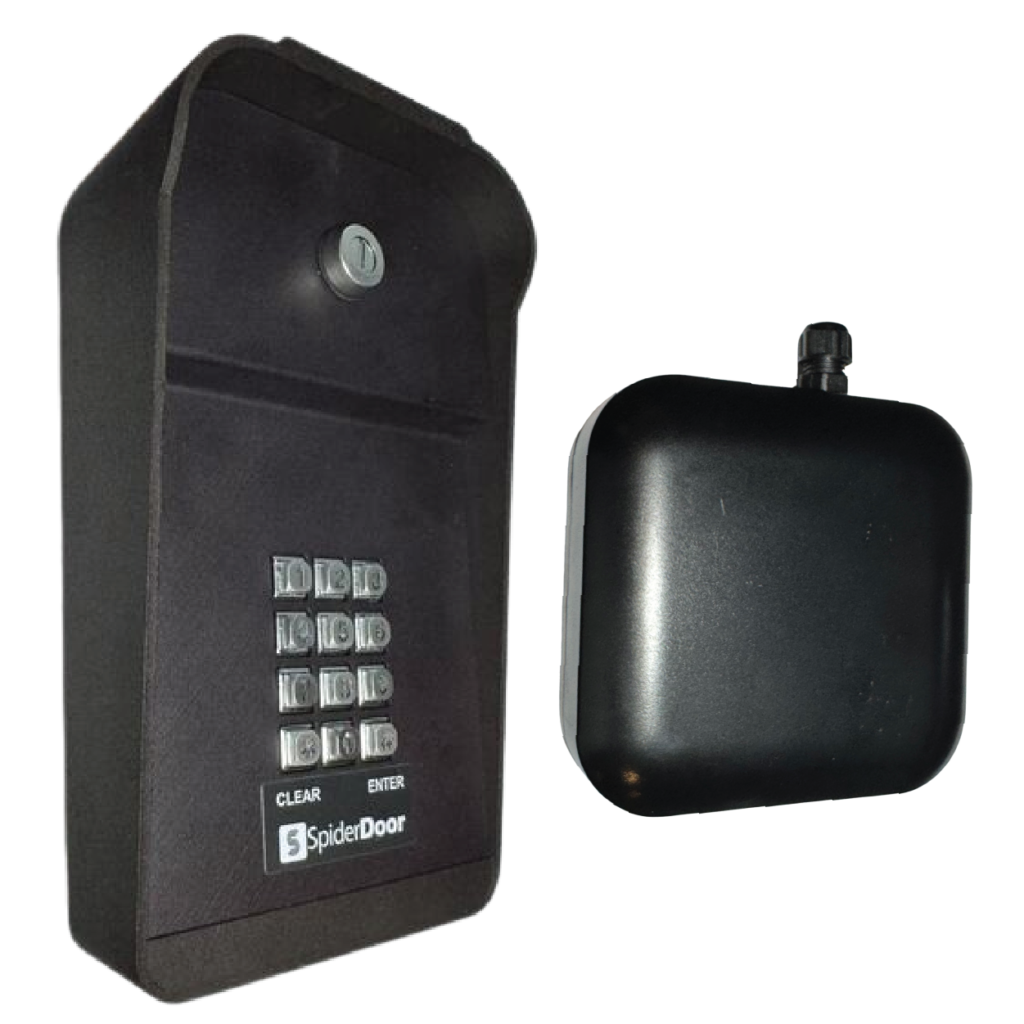
A solar gate keypad uses an integrated solar panel to charge an internal battery, keeping the unit running continuously without any connection to your facility’s electrical system. Instead of a hardwired connection to the gate controller, the keypad communicates wirelessly (typically via cellular) to manage access permissions and log activity.
The result is a fully functional access control keypad that you can mount almost anywhere on your property.
For self-storage operators, this matters in situations where traditional wired keypads have always been impractical: the back corner of a large property, a newly developed expansion area, an outdoor parking or RV lot, or a remote facility without reliable electrical infrastructure nearby.
Why the Wiring Problem Is Bigger Than It Looks
Running power to a gate isn’t just expensive, it’s disruptive. It typically means cutting through or trenching under driveways, pulling permits, coordinating with electricians, and adding weeks to a project timeline. Then you still have to run communication wiring between the keypad and the gate controller.
Solar gate keypads eliminate both problems at once. There’s no power to run and no communication wire to trench. The keypad handles everything wirelessly, and installation is usually a matter of hours rather than days.
This is especially valuable when you’re expanding a facility. Adding a new building or parking section shouldn’t require re-engineering your electrical infrastructure. With a solar keypad, it doesn’t have to.
Introducing SpiderDoor’s S15 and M15 Solar Keypads
SpiderDoor’s upcoming S15 and M15 solar gate keypads are built for exactly this kind of situation.
Like SpiderDoor’s existing cellular keypad models, the solar versions require no additional controllers, software installations, or external equipment. A small receiver module connects to your gate motor with a short two-foot relay wire. The keypad manages access permissions and activity logs over a cellular connection. Power comes from the solar panel mounted on top of the unit.
That’s it.
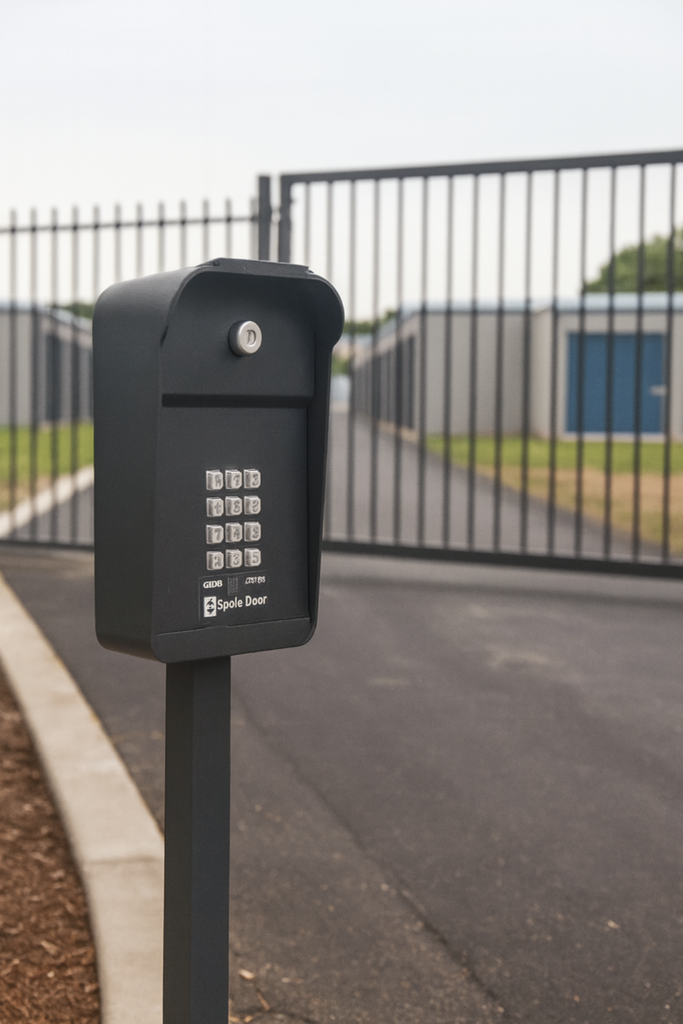
The S15 and M15 are particularly well-suited for:
- Remote self-storage facilities where electrical infrastructure is limited
- New construction or expansion areas where running power would add significant cost
- Truck parking yards and outdoor storage areas
- Any gate location where a traditional wired keypad just isn’t practical
Because they run on SpiderDoor’s access control platform, they also integrate with leading self-storage management software, so gate permissions update automatically when tenants move in, fall behind on payments, or vacate.
Solar Is Already Moving Through the Self-Storage Industry
Solar adoption in self-storage isn’t a future trend, it’s already happening at scale. Public Storage has installed solar at more than 775 of its facilities, with a goal of reaching 1,300 properties. For smaller and independent operators, solar gate keypads offer a lower-stakes entry point into solar-powered operations, with no rooftop installation required and a clear, immediate return on investment tied to eliminating electrical trenching costs.
Installation and Maintenance
Installation follows the same straightforward process as SpiderDoor’s wired cellular keypads, minus the electrical work:
- Mount the keypad pedestal at the gate entry point
- Connect the receiver module to the gate motor with the short relay wire
- Activate the keypad and configure access through the SpiderDoor platform
The keypad communicates with the receiver module via Bluetooth, so there is no communication wiring needed between the two. The receiver module handles the connection to the gate motor, and the keypad handles everything else over cellular.
Ongoing maintenance is minimal. Keep the solar panel clear of debris, monitor battery performance through the dashboard, and inspect the relay connection periodically. That’s the short list.

See Us at an Upcoming Show
SpiderDoor will be demonstrating the S15 and M15 solar keypads live at two upcoming industry events.
- ISS World Expo — Las Vegas, NV — April 7–10 — Booth 404
- Northeast Storage Expo — Ledyard, CT — June 11–13 — Booth 23
Come by our booth to see how the system installs, how it works, and whether it’s a fit for your facility. If you can’t make either show, visit our access control systems page to learn more about the full SpiderDoor lineup.