Boat and RV storage tenants are easier to manage than traditional self-storage tenants in most ways. They access the facility less often, they don’t call as much, and their lease terms are simpler. Delinquency is the exception. When a B&RV tenant stops paying, they’re often harder to reach, more reluctant to engage, and sitting on a vehicle worth tens of thousands of dollars that you can’t easily dispose of.
Managing that situation remotely, without driving to the site every time someone goes late, requires a system that works without you in it.
Why B&RV Delinquency Is Different
Traditional self-storage delinquency follows a familiar pattern: tenant goes late, you send notices, you auction the unit if they don’t pay. The legal process is well-established and most state self-storage lien laws are straightforward.
B&RV is different in three ways that matter operationally.
Vehicles have existing liens. Most stored boats and RVs were purchased with financing. The vehicle has a lien holder (a bank or credit union) whose interest supersedes yours. You can’t auction an RV the way you auction a storage unit’s contents. The lien sale process for vehicles involves DMV filings, title procedures, and timelines that vary significantly by state. In many states, selling a vehicle with an existing lien exposes you legally regardless of how long the tenant has been delinquent.
Seasonal tenants go silent. B&RV tenants often pay reliably for months, then disappear when they’re not actively using the vehicle. Snowbirds leave for six months. Boat owners winterize and stop thinking about storage. A tenant who was perfectly reliable in summer can be two months late by February with no awareness it happened. Manual follow-up on these accounts is the kind of work that falls through the cracks at unmanned facilities.
The vehicle is leverage you’re probably not using. Stored vehicles range from travel trailers averaging around $25,000 to Class A motorhomes averaging over $200,000 (JD Power Values, Q1 2026). A delinquent tenant is almost never behind on rent by more than a fraction of what their vehicle is worth. That imbalance is leverage, and most operators don’t activate it systematically. Gate denial, blocking keypad access when an account goes delinquent, is the most effective collection tool available. Most B&RV operators either don’t have it automated or don’t use it consistently.
The Collections Sequence That Runs Without You
The right delinquency workflow sends reminders before the tenant is even aware they’re at risk, escalates automatically, and activates gate denial on a date you set, all without requiring action from you after initial setup.
Days 1–5 after due date:
Automated text and email reminders with a one-click payment link. Most late payments resolve here. The tenant forgot, they see the text, they pay. No manager involvement.
Days 6–15:
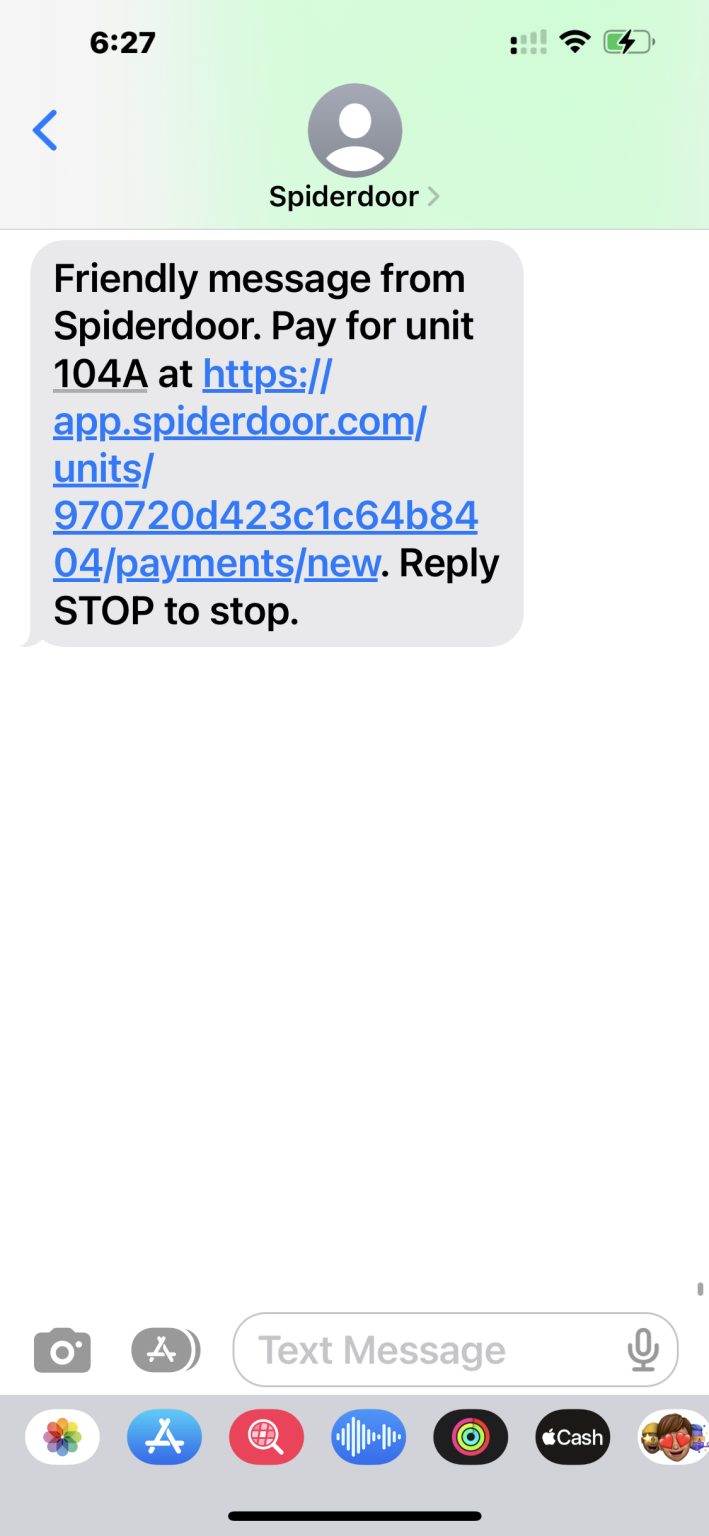
Second and third reminders on the schedule you define. Same channels, slightly firmer language. An automated robo-call option covers tenants who don’t respond to text or email. They pick up, press 1, and pay over the automated system.

Lockout date:
Gate access restricts automatically. The tenant drives to the facility, enters their code, gets denied, and receives an automatic text with a payment link at that exact moment. For B&RV tenants, this is usually the step that resolves the situation. They want their vehicle, and the gate is the only thing between them and it.
Gate Denial: The Leverage Most Operators Underuse
Most landlords can’t physically block a non-paying tenant from accessing their property without a court order. B&RV storage operators can, because they control the gate.
When access control integrates with your management software’s delinquency data, gate denial is automatic. The account goes past due, the code gets restricted, the tenant can’t enter. No confrontation, no phone call from the manager, no awkward conversation at the gate. The tenant’s only path to resolution is paying.
The key is integration. A standalone gate keypad with no connection to your management software requires manual code removal every time someone goes delinquent. An integrated system does it automatically on the date you specify and restores access the moment the tenant pays, with no action required from you.
What Still Requires a Human
Automated collections handles the entire reminder and gate denial sequence. Past that point, human judgment enters.
Escalation decisions. When a tenant is 60 to 90 days delinquent and not responding, you have to decide whether to pursue a lien sale or other legal remedy. This depends on your state’s vehicle storage lien laws, whether the vehicle has an existing lien holder, and the vehicle’s value relative to the outstanding balance. This is where you involve a lawyer familiar with vehicle storage lien law in your state, not something to navigate from a collections dashboard.
Tenant disputes. Occasionally, a tenant disputes a charge or claims a payment was already made. These require direct communication and sometimes a reversal in your management software.
The goal of automation isn’t to eliminate human judgment. It’s to reserve it for situations that actually need it, rather than spending it on reminder texts and payment links.
Getting the System Set Up
If you’re running a B&RV facility without automated collections, you’re spending management time every month on work the system can do for you. The setup requires two things: SpiderDoor’s Debt Collector connected to your management software, and your access control integrated with that same software so gate denial runs automatically.
If you’re still managing gate codes manually, that integration is the prerequisite. Gate denial without integration means pulling codes by hand, and manual processes fail consistently at unmanned facilities.
For operators already running integrated access control, adding the Debt Collector is a configuration step, not a new installation. You set the reminder schedule, choose the lockout date, write or use the default message templates, and the system handles the rest.